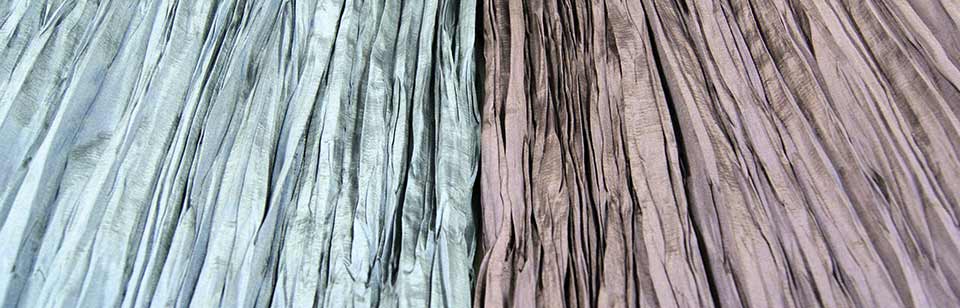
Fabric crashing / crushing
Introduction
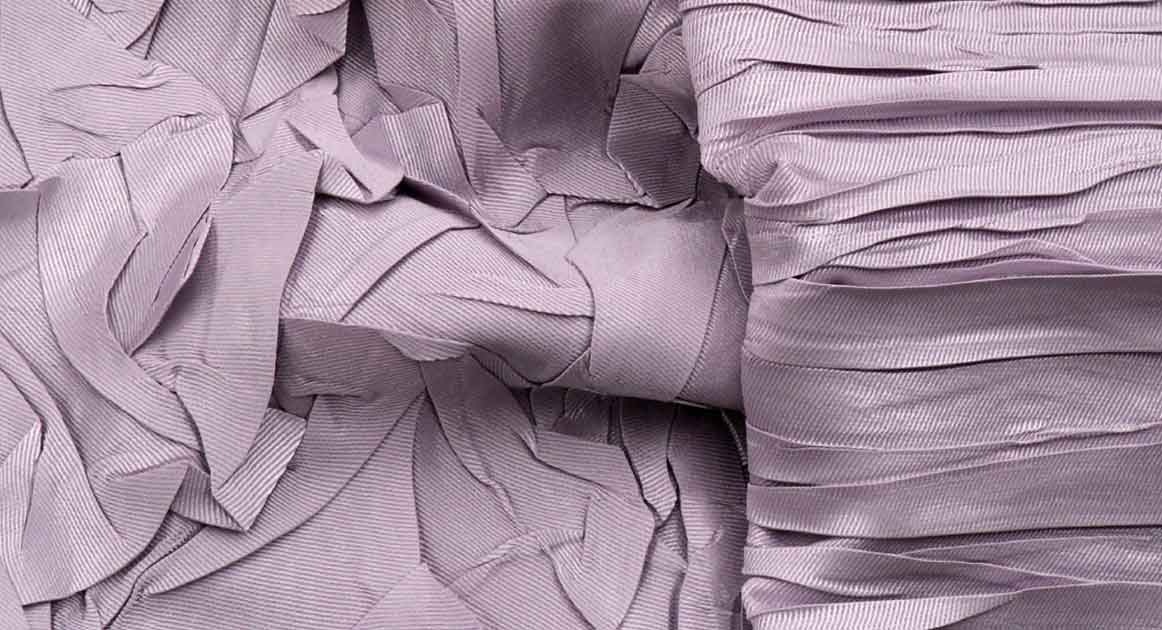
Material crashing/crushing is a process similar to pleating, also involving the fixation of a pattern on the material through the action of high temperature and/or steam. However, what distinguishes crashing from pleating is the irregularity of the pattern. While in pleating, in most patterns the folds are perfectly parallel and create a coherent whole, in creasing the pattern seems to elude straight lines and harmony. Over the years, we have managed to develop several proprietary solutions that allow for obtaining different crashing effects, depending on the customer's design. We offer a whole range of patterns - longitudinal, diagonal, torsional, partial, flat, spatial. Our technological lines allow us to adjust the patterns (e.g. the degree of material waviness or the possibility of selective crashing), thanks to which we are able to obtain a very high repeatability of patterns, even despite their seemingly 'random' nature. Depending on the pattern, we offer crashing of elements, finished products or material from the meter.
Crashing – crash type "5"
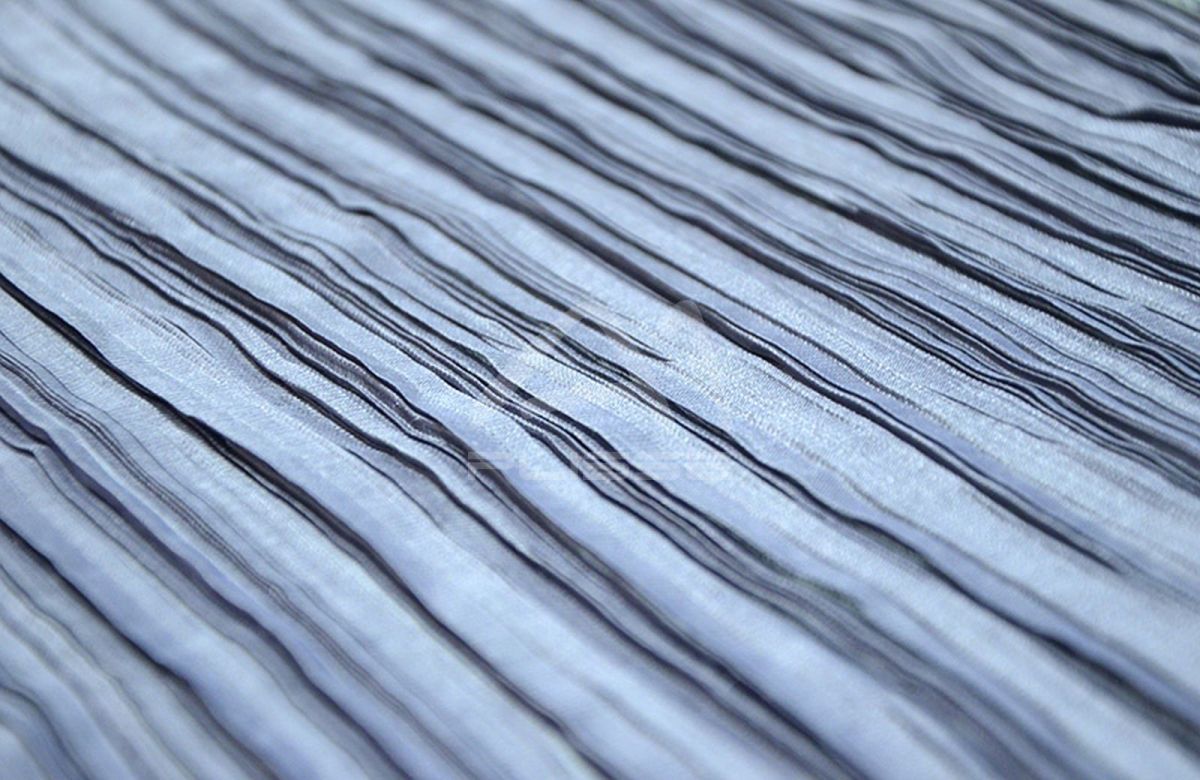

Type 5 crashing - regular crashing consisting of parallel pleats and box pleats. It is possible to adjust crashing density and the distance between folds.
Irregular crashing
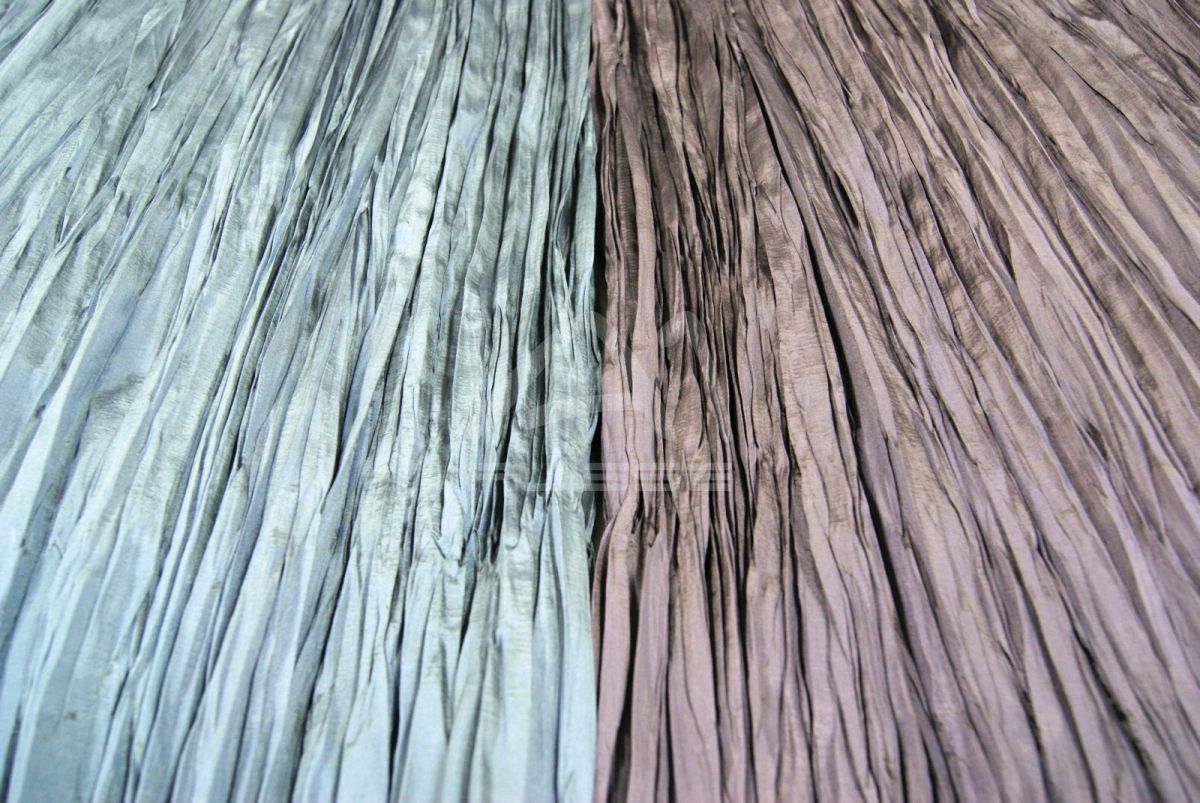
Longitudinal crashing (parallel to one of the material edges) with the possibility of adjusting the desired density of the creases. Since the machines used in this crashing type work on a different principle than the pleating machines, they are not as sensitive to the thickness of the material or unevenness. Therefore, we can offer a service of crashing of finished products, in which sewn elements are creased (buttons and zippers should not be present at this point). This process allows for a significant improvement in production efficiency, because the product leaving our company is almost ready to be delivered to the end customer. Additionally, thanks to the technologies we have developed, we can also perform the creasing service while maintaining the final dimensions set by the customer for each size, making the necessary changes during processing.
Crashing – "glass shatters" style
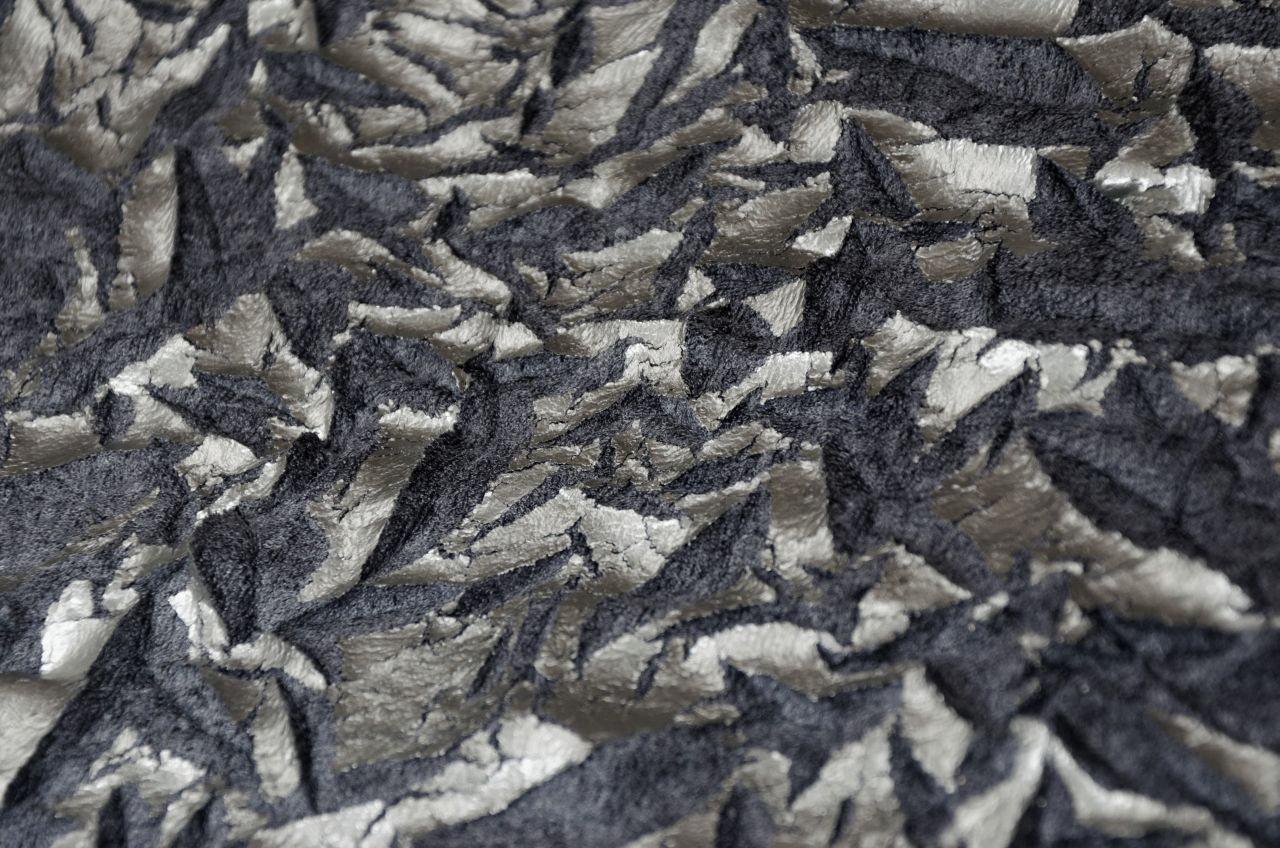
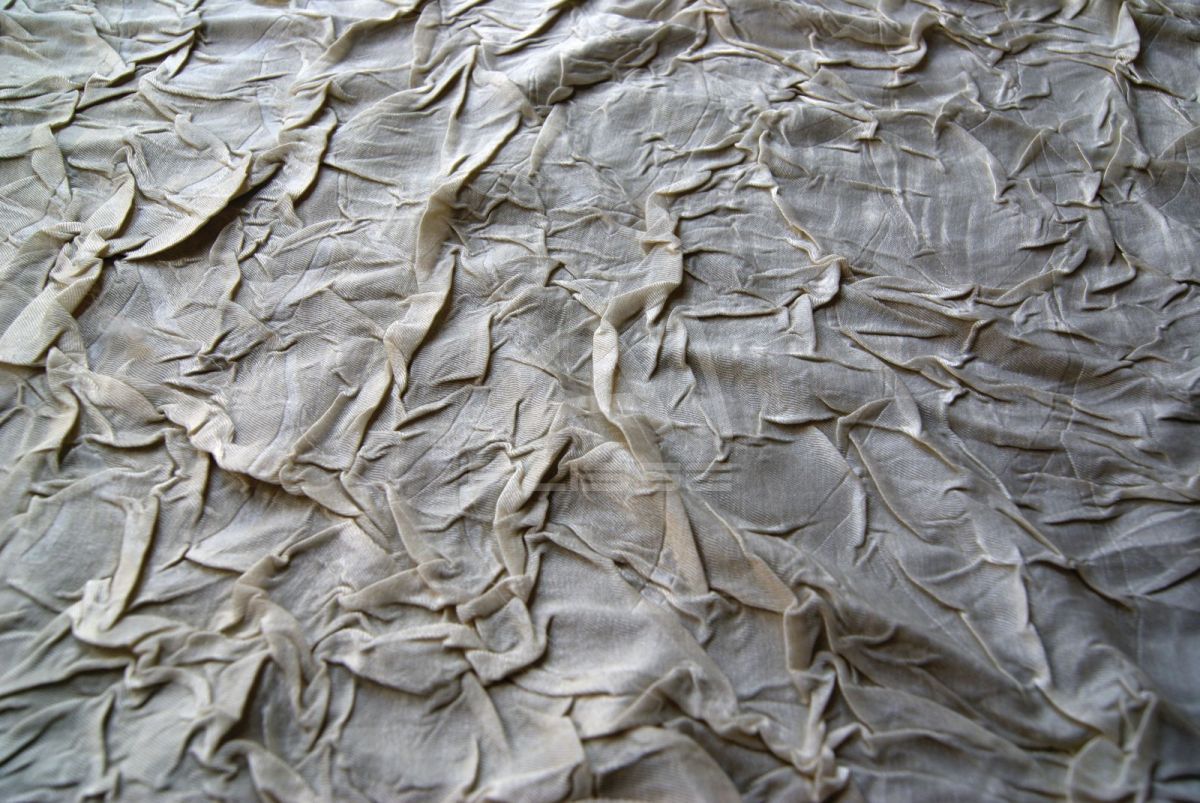
Irregular material crashing in all directions. In this type of crashing the folds are short and each another changes direction more rapidly, than in standard irregular crashing. It is possible to set the desired degree of crashing density, the final dimension to which the crashing is to be performed and, if necessary, to glue the crashed patterns.
Custom crashing
In addition to the above-mentioned service options, we also carry out custom orders. If you want to make a different type of crashing, try to make it on a different material (including atypical ones), combine different services or try to recreate crashing based on a photo or model - please contact us.
- "Shattered glass" pattern: up to 1.5m x 1m. Larger items = less density. If a backing layer is to be applied after crinkling, the maximum size is 1m x 0.7m.
- Type "5" crashing/crushing - max width = 1.5m. Usually we work with 1.5m x 1.5m panels, it is also possible to crash/crush material from roll in lengths around 15-20 m per piece.